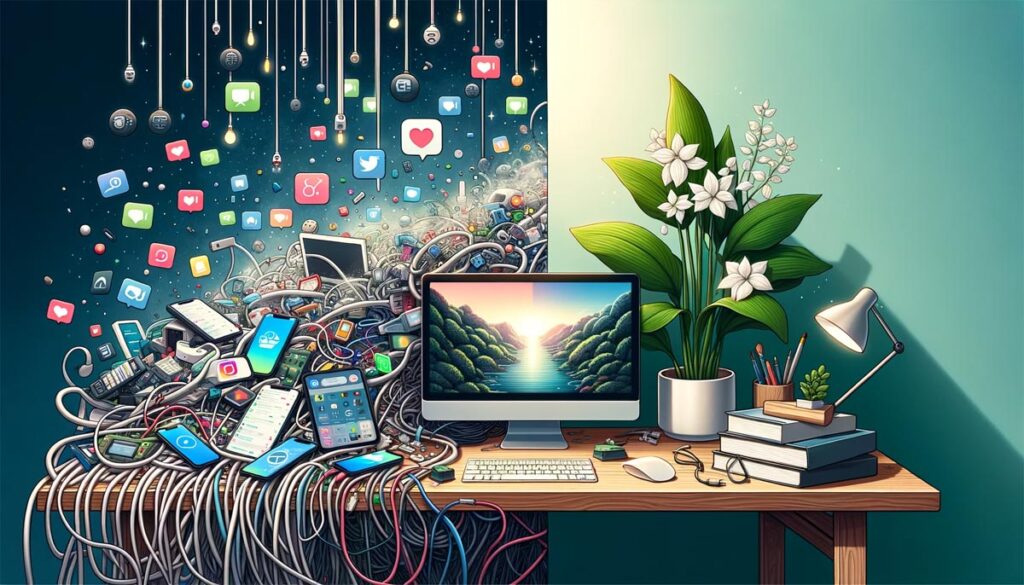
Why Digital Minimalism Wins in a Noisy World
We live in an age where information flows faster than thought, devices compete for our attention every second, and the digital world follows us from the moment we wake to the moment we sleep. Our screens promise convenience, entertainment, and connection—but they often deliver distraction, anxiety, and mental fatigue. In this environment, digital minimalism has emerged not just as a lifestyle choice but as a survival strategy.
Digital minimalism is the intentional practice of using technology in ways that support our values, rather than allowing technology to dictate our behavior. It’s not anti-technology; it’s about reclaiming control over our time, focus, and mental clarity.
In a world growing noisier by the day, digital minimalism doesn’t simply help—it wins.
The Age of Digital Overload
Never in human history have we been exposed to such constant stimulation:
- Continuous notifications
- Endless content streams
- Social media algorithms engineered for addiction
- Work tools that blur boundaries between home and office
- The expectation of instant response
What used to be free time is now filled with micro-scrolling. Silence has been replaced by screens. Even boredom—a powerful driver of creativity—has nearly vanished.
The result?
Cognitive fatigue, shallow focus, decreased productivity, anxiety, and a constant feeling of being “behind.”
Digital overload fragments our attention so deeply that our minds rarely get the chance to rest or think clearly. And in this psychological environment, digital minimalism becomes a powerful antidote.
What Is Digital Minimalism?
Digital minimalism focuses on two core principles:
1. Intention
Using technology deliberately, not reflexively.
2. Value-driven Use
Only engaging with digital tools that genuinely improve our lives.
This means:
- Reducing mindless consumption
- Eliminating digital noise
- Prioritizing deep, meaningful digital experiences
- Creating boundaries around tech use
Digital minimalism isn’t about abandoning devices—it’s about using them wisely and consciously.
Why Digital Minimalism Wins
1. It Restores Attention—Your Most Valuable Asset
In the modern economy, attention is currency. Tech companies profit by stealing yours.
Digital minimalism gives it back.
When you clear out unnecessary apps, turn off non-essential notifications, and minimize digital clutter, your attention stops being fragmented. You gain the ability to focus deeply—on work, on people, and on the present moment.
Deep focus leads to:
- Higher productivity
- Greater creativity
- Better decision-making
- More satisfaction
When everyone else is scrolling, the person who can concentrate stands out.
2. It Reduces Stress and Cognitive Load
Each alert, each message, each flicker of your screen imposes a small cognitive tax. While individually tiny, collectively they drain mental energy.
Digital minimalism removes the constant buzz of digital demands.
Fewer notifications = fewer decisions = more clarity.
This reduction in cognitive load creates:
- A calmer mind
- More emotional resilience
- Fewer mood swings
- Better sleep
- Less burnout
In a world filled with noise, clarity becomes a competitive advantage.
3. It Helps You Reclaim Time
Digital distractions consume hours in small increments:
- 30 seconds checking a message
- 2 minutes scrolling
- 10 minutes watching a clip
- Repeating dozens of times a day
These moments add up to hundreds of lost hours per year.
Digital minimalism helps you reclaim these hours and invest them in:
- Learning
- Rest
- Real relationships
- Meaningful work
- Hobbies
- Reflection
Time is life. Reclaiming time means reclaiming your life.
4. It Strengthens Real Relationships
Technology connects us broadly but often weakens us deeply.
Digital minimalism encourages:
- Putting the phone away when with others
- Calling instead of texting when it matters
- Prioritizing in-person connection
- Engaging in long-form conversation rather than short bursts
When you minimize digital distractions, you maximize human presence.
People feel more heard, more valued, and more understood.
5. It Boosts Creativity
Creativity thrives in:
- Silence
- Boredom
- Deep thought
- Focus
- Mental spaciousness
But the digital world fills every gap, leaving no room for the mind to wander.
By restricting digital noise, minimalism restores:
- Imagination
- Original thinking
- Novel ideas
- Problem-solving skills
As the world becomes increasingly automated, human creativity becomes more essential. Digital minimalism nurtures it.
6. It Improves Mental Health
Excessive digital consumption is linked to:
- Anxiety
- Stress
- Comparison
- Low self-esteem
- Depression
- Isolation
By reducing digital clutter, we reduce:
- Comparison triggers
- Algorithmic manipulation
- Emotional overstimulation
Digital minimalism offers mental breathing room—a psychological detox from the constant stream of digital input.
7. It Reinforces Personal Autonomy
Everyone is being nudged by algorithms:
- What to buy
- What to watch
- What to think
- What to feel
Digital minimalism breaks this invisible manipulation.
It helps you:
- Decide what deserves attention
- Set personal boundaries
- Control your behavior rather than being controlled
- Cultivate agency
In a world where attention is manipulated, autonomy is freedom.
8. It Enhances Quality of Life
Minimalism in the physical world creates peaceful spaces.
Minimalism in the digital world creates peaceful minds.
When your devices are organized, your social feeds intentional, and your digital time purposeful, life feels:
- Less chaotic
- More meaningful
- More present
- More fulfilling
Digital minimalism leads to a more deliberate and aligned life.
How to Practice Digital Minimalism
Here are practical steps to adopt this lifestyle:
1. Start with a Digital Declutter
Remove anything that doesn’t serve a clear purpose:
- Delete unused apps
- Unsubscribe from junk emails
- Clear your home screen
- Limit social media platforms
2. Set Notification Boundaries
Turn off any notification that is not essential or human-generated.
3. Create “No-Phone” Zones
Examples:
- Bedroom
- Dinner table
- Social gatherings
- Morning routine
4. Replace Digital Habits with Analog Ones
- Reading physical books
- Journaling
- Walking without headphones
- Playing board games
- Drawing
- Meditation
5. Schedule Focused Tech Use
Instead of checking devices continuously, check them intentionally at set times.
6. Question Every Digital Choice
Ask:
“Does this tool improve my life, or just consume it?”
Digital Minimalism Is Not a Trend—It’s a Mindset Shift
As the digital world grows noisier, the value of silence grows.
As attention becomes more scattered, focus becomes more powerful.
As algorithms become more persuasive, autonomy becomes more precious.
Digital minimalism isn’t about rejecting technology—it’s about reclaiming your humanity within it.
In a society where everyone is drowning in digital noise, the person who chooses clarity, intention, and focus rises above the crowd. That is why digital minimalism doesn’t just survive—it wins.